Bush and grass fires
Grass and scrub fires happen year-round, but in summer there’s a higher chance that fire will affect your area.
These fires start easily and move fast, especially when pushed along by strong winds. The heat is intense and the speed of the flames rapidly increases travelling up slopes. Even with aircraft, they are difficult to contain and control.
Typically, a grass or scrub fire alert will see two or three local Brigades respond. On arrival, the crews will assess the risks and begin attacking the blaze, usually working along the sides (flanks) towards the ‘head’ of the fire.
On high-risk days, the response starts with around five Brigades and can often escalate to more than twenty. Having your property prepared for the fire season is vital, including making sure gates and driveways are wide enough to allow trucks to quickly enter. It’s also vital that you have a well-practiced fire plan.
ARE YOU PREPARED? DO YOU HAVE A FIRE PLAN? Being prepared, knowing what to do if a fire threatens your property, and leaving early are the best weapons against the threat of fire. In severe conditions, it’s impossible to have a fire truck in every driveway and with a fire racing towards you, it’s too late to do anything except leave or seek shelter.
Your local Brigade members can help you get ready with easy-to-follow fire plans, free property inspections and in-depth knowledge of historical fires in your area.
Understanding Fire Danger Ratings
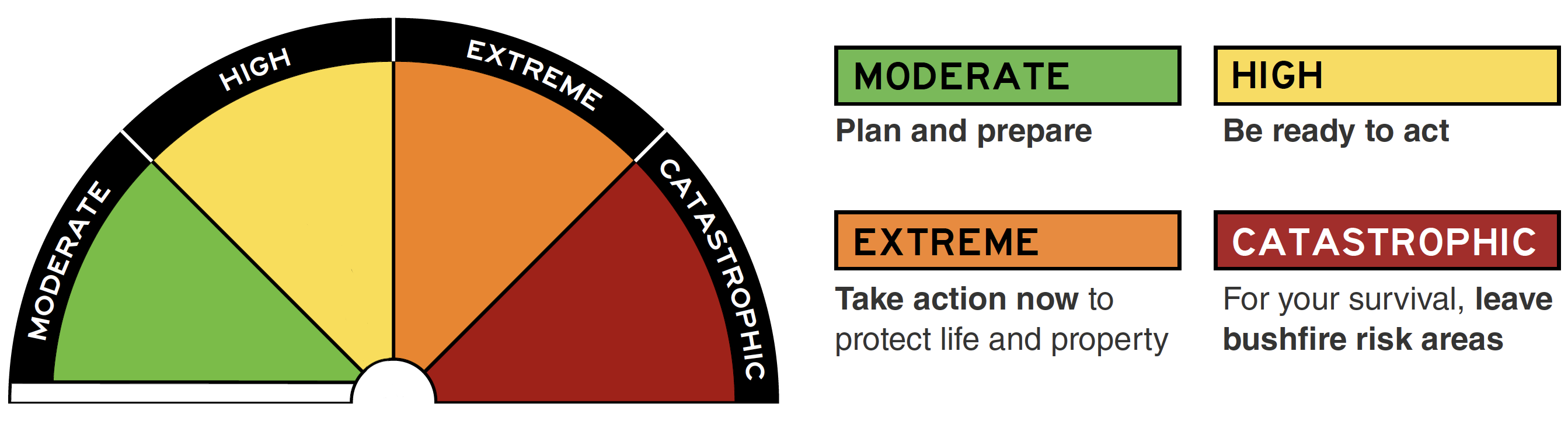
Bush and grass fires can happen at any time, even in the middle of winter.
The FIRE DANGER INDICATOR signs show the actions that need to be taken.
A HIGH danger means there is a good chance Brigades will be able to contain a blaze.
An EXTREME danger means that a blaze is unlikely to be controlled.
CATASTROPHIC means a fire won’t be able to be controlled